
What Does Hygiene Look Like in a Post-Covid World?
In the post-Covid UK, hygiene habits have transformed dramatically, prompting questions about how hygiene has changed in a post-Covid world. For businesses, facilities managers, and everyday citizens, exploring how hygiene has changed is crucial to keeping everyone safe and healthy.
We’ll take a look at key hygiene measures after lockdown, from hand washing and contactless technology to updated cleaning practices - all with tips you can put into action today. Read on to discover what hygiene looks like in a post-Covid world and how Woosh Washrooms can support your hygiene needs.
Contents
- What Does Hygiene Look Like in a Post-Covid World?
- Current Covid-19 and Hygiene Awareness in the UK
- How Has Hygiene Changed Since Covid?
- How Personal Hygiene Has Evolved
- How Cleaning Standards Have Changed
- Reduced Touchpoints and Rise of Contactless Options
- Hand Washing and Hand Sanitiser Trends in the UK
- Spread of Contagious Diseases Post-Covid
- Why Choose Woosh Washrooms?
What Does Hygiene Look Like in a Post-Covid World?
Since the pandemic, hygiene trends have shifted noticeably, with people more conscious of germs, regularly washing their hands, and expecting higher standards of cleanliness in both public and private spaces.
- Personal hygiene routines now include regular sanitising of hands and surfaces, and the use of hand sanitiser in workplaces and public areas has become commonplace.
- Businesses have introduced updated cleaning schedules, staff training, and robust hygiene policies, while individuals pay closer attention to daily habits such as using tissues, cleaning personal items, and minimising unnecessary contact.
These combined efforts reflect a collective move towards reducing the spread of contagious diseases and creating safer, healthier environments.
Current Covid-19 and Hygiene Awareness in the UK
Here, we take a look at the current Covid-19 situation in the UK and how it has shaped our awareness of hygiene, showing the habits and trends that are now part of everyday life.
Latest Covid-19 Statistics in the UK
COVID-19 activity in the UK has declined to baseline levels, according to UKHSA, with PCR positivity in hospital settings around 5% as of early November 2025. Vaccine uptake continues to play a key role; by the end of week 45 in 2025, 56.5% of people aged 75+ had received the autumn COVID‑19 booster. Meanwhile, public PCR test positivity (7‑day rolling average) dropped to approximately 5.08% as of 7 November 2025.
Public Awareness of Germs and Hygiene
Public awareness of germs has increased significantly since the pandemic. Many people are more mindful of hand washing at key moments, using sanitiser, and maintaining clean habits in daily life. This shift highlights how hygiene has become a greater part of everyday routines and the importance of ongoing awareness and education.
How Has Hygiene Changed Since Covid?
Since the Covid-19 pandemic, hygiene practices have transformed across the UK. People are washing their hands more consistently, using hand sanitiser more regularly, and adopting new cleaning routines at home, at work, and in public spaces. These changes reflect a broader shift towards proactive hygiene measures and increased awareness of preventing the spread of germs.
How Personal Hygiene Has Evolved
Personal hygiene has shifted in lasting ways since Covid, with people becoming more conscious of simple daily habits that help protect themselves and others. These changes can be seen in how we wash our hands, use sanitiser and take extra care with the things we touch most often.
Everyday Hygiene Habits
Daily routines now often include more frequent hand washing and conscientious use of sanitiser. People are also paying more attention to cleaning personal items such as phones, keys, and work surfaces. Key habits include:
- Using hand sanitiser when on the go
- Washing hands at important moments, such as before meals or after public transport
- Using wall-mounted or automatic dispensers in shared spaces
- Incorporating foam soaps for a more pleasant hygiene experience
Long-Term Behavioural Changes
The shift in hygiene thinking is not just temporary, many of the changes introduced during the pandemic have become ingrained habits:
- Touchless expectation: People now prefer hands-free hygiene options in public and workplace settings.
- Mindful social interactions: Increased awareness of germ transmission influences behaviour, such as sanitising before and after shared interactions.
- Personal responsibility: Hygiene is seen as a civic duty, protecting both oneself and others.
- Sustainable hygiene: Refillable dispensers and durable products are increasingly popular, reducing waste.
How Cleaning Standards Have Changed
Cleaning standards have evolved significantly since the pandemic, with a stronger focus on maintaining safe and hygienic environments.
Enhanced Cleaning Protocols
Businesses and public spaces now follow stricter cleaning routines, using more effective disinfectants and sanitising high-touch areas regularly. Cleaning schedules are more frequent and structured, with dedicated staff responsible for key hygiene tasks. Visible cleaning practices reassure staff and visitors that hygiene is a priority, and ongoing staff training ensures everyone understands the importance of their role in maintaining cleanliness.
Shifts in Workplace Cleaning Expectations
Employees expect cleaner and safer workplaces, with frequent sanitation of shared spaces, accessible hand sanitiser, and visible cleaning practices providing reassurance and promoting wellbeing. Shared areas like kitchens, meeting rooms, and toilets are cleaned more often, and there is a greater emphasis on maintaining equipment and surfaces. Employers now recognise that high hygiene standards support productivity, employee satisfaction, and overall health.
Reduced Touchpoints & Rise of Contactless Options
Shared surfaces are much less common now, and contactless technology has become a hygiene tool as well as a convenience. From automatic doors to touch-free payment systems and soap dispensers or sanitiser dispensers, many of the things we once touched dozens of times a day are now hands-free.
Contactless payments in particular have surged since the pandemic: in 2023, 38% of all UK payments were made using contactless methods, including both cards and mobile wallets. Around 34% of UK adults now use mobile contactless payments at least once a month. This shift reduces the need to touch card readers, cash machines or PIN pads, helping to lower the risk of germ transmission.
These changes improve convenience and reinforce hygiene culture, making public and workspaces safer and more confident places to be.
Hand Washing and Hand Sanitiser Trends in the UK
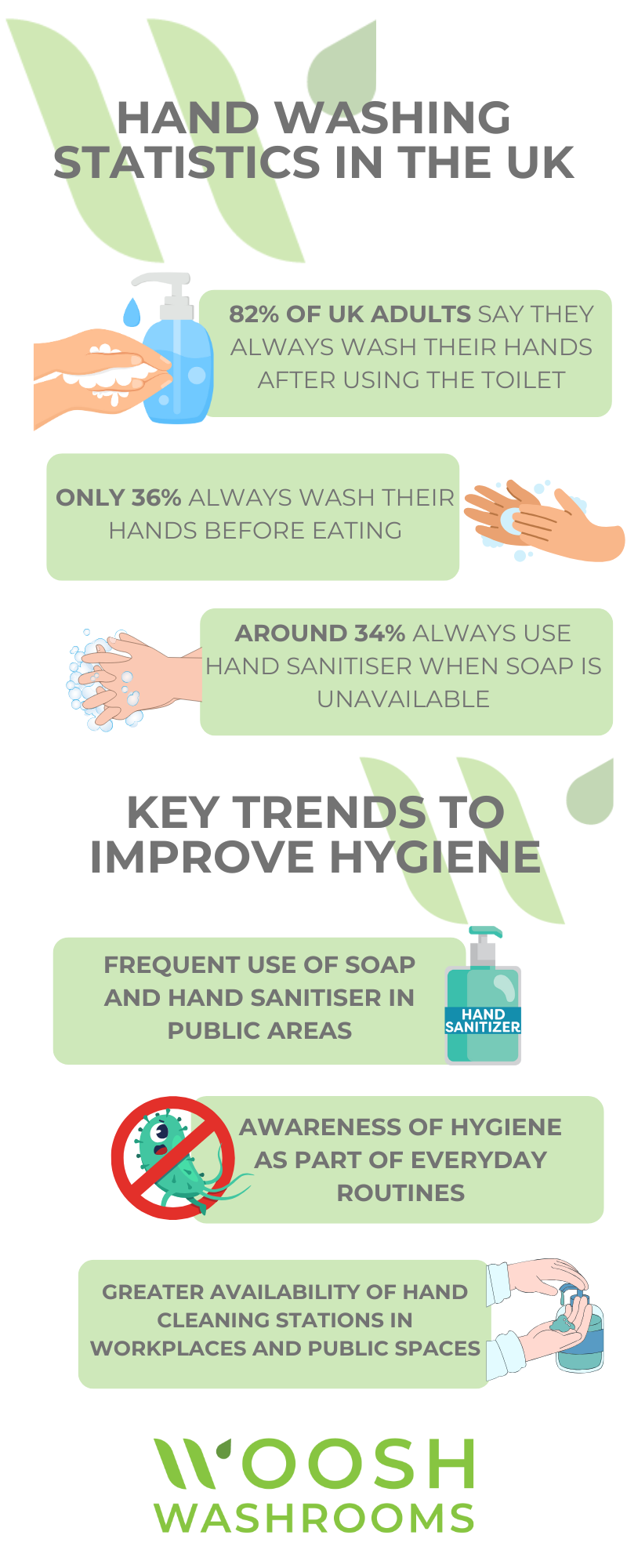
Hand washing frequency has increased and the availability of hand sanitiser in public spaces has become widespread. A recent hygiene survey conducted by YouGov shows that more people are now mindful of washing hands at key times and carrying personal sanitiser, reflecting a broader commitment to hygiene measures after lockdown. Key findings include:
- 82% of UK adults say they always wash their hands after using the toilet
- Only 36% always wash their hands before eating
- Around 34% always use hand sanitiser when soap is unavailable
Key trends include:
- Frequent use of soap and hand sanitiser in public areas
- Awareness of hygiene as part of everyday routines
- Greater availability of hand cleaning stations in workplaces and public spaces
Spread of Contagious Diseases Post-Covid
As hygiene habits have improved, the way contagious diseases spread in the UK has shifted, with people more aware of how everyday actions influence transmission.
How Contagious Diseases Are Spreading Post-Covid
While respiratory illnesses like colds and flu continue to circulate, many organisations have noticed changes in seasonal patterns and overall transmission. Greater awareness of hand hygiene, better ventilation in workplaces and public venues, and more consistent cleaning routines have contributed to fewer large spikes in some infections.
However, increased social mixing and the return to normal routines mean that germs can still spread quickly, particularly in busy shared environments such as offices, schools, and public transport.
Preventative Measures to Reduce Spread
Preventing illness remains a shared responsibility, and simple, everyday actions make a meaningful difference. Effective hygiene practices that help reduce the spread of contagious diseases include:
- Washing hands with soap at key moments such as after travel or before eating
- Using hand sanitiser in situations where soap and water are unavailable
- Keeping shared spaces clean, especially high-touch points like handles and switches
- Improving airflow by opening windows or using ventilation systems
- Staying home when unwell to reduce the risk of spreading infections
These small but consistent behaviours help create safer spaces and maintain the improved hygiene culture developed over recent years.
Why Choose Woosh Washrooms
Choosing Woosh Washrooms means partnering with a team that understands what modern hygiene truly requires. Our services are designed to support cleaner, safer, and more welcoming washrooms, helping businesses meet rising expectations around hygiene and comfort.
We focus on consistent quality, reliable servicing, and washroom solutions that promote good hygiene habits for every user. Whether it's maintaining soap and sanitiser availability, keeping facilities fresh, or delivering proactive support, Woosh helps create spaces people feel confident using.
Key Takeaways for Post-Covid Hygiene
- Hygiene awareness across the UK has increased, with stronger daily habits becoming the norm.
- Hand washing and sanitiser use remain key behaviours for reducing the spread of germs.
- Businesses and workplaces now prioritise stricter, more structured cleaning routines.
- Contactless technology and reduced touchpoints play a major role in improving hygiene confidence.
- Personal hygiene has evolved, with many changes becoming long-term habits.
- Consistent ventilation, surface cleaning, and responsible behaviour help limit the spread of illness.
- Professional hygiene support, such as that provided by Woosh Washrooms, helps organisations maintain reliable, high-quality hygiene standards.
Frequently Asked Questions
What have we learned from the COVID pandemic?
We’ve learned that hygiene habits play a crucial role in preventing illness, and the COVID pandemic showed how hygiene has changed in a post-Covid world, both personally and socially. People now wash their hands more often, use sanitiser regularly, and think more carefully about ventilation and shared surfaces. A recent hygiene survey also showed that the public is far more aware of when hand washing matters most, such as before eating or after travelling. We’ve also learned the value of reliable cleaning routines, reduced touchpoints, and clear communication in keeping workplaces and public areas safer.
What are the hygiene practices for COVID-19?
The most important hygiene practices for COVID-19 include regular hand washing, using hand sanitiser when soap and water aren’t available, improving ventilation, and keeping high-touch surfaces clean. These practices reflect how hygiene has changed since the pandemic, with people adopting more consistent habits to limit the spread of germs. Many workplaces have also introduced touch-free technology, better cleaning protocols, and visible sanitising stations, helping reinforce safer daily behaviour.
What hygiene measures are in place after lockdown?
Key hygiene measures after lockdown include increased hand washing, wider access to sanitising stations, enhanced cleaning routines in public and workplace settings, and the use of contactless options to reduce shared touchpoints. These measures show how hygiene has changed in a post-Covid world, moving towards prevention rather than reaction. Many businesses now follow structured cleaning schedules and ensure consistent access to soap, sanitiser, and hygienic fixtures to support long-term safer environments.
Reinforce Hygiene with Woosh Washrooms
The way we approach hygiene has changed permanently, with more conscious habits, structured cleaning routines, and touch-free technology shaping our daily lives. The way hygiene has changed in a post-Covid world reflects a shift toward prevention and public safety, making high standards essential for workplaces and public spaces alike.
Woosh Washrooms is here to support UK businesses by providing reliable, modern hygiene solutions, from ensuring soap and hand sanitiser availability to maintaining clean, welcoming facilities. Partnering with Woosh means you can reinforce hygiene measures after lockdown and create a safe environment that staff, visitors, and customers can trust.
Take the first step in elevating your hygiene standards today - contact Woosh Washrooms to learn more about how we can help you maintain cleaner, safer spaces.
Related Articles
- Your Ultimate Guide to Commercial Hygiene
- Clean Air for Schools & Nurseries
- Duty of Care Regulations for Washroom Managers