
Hand Dryers Vs. Paper Towels: Which Works Better?
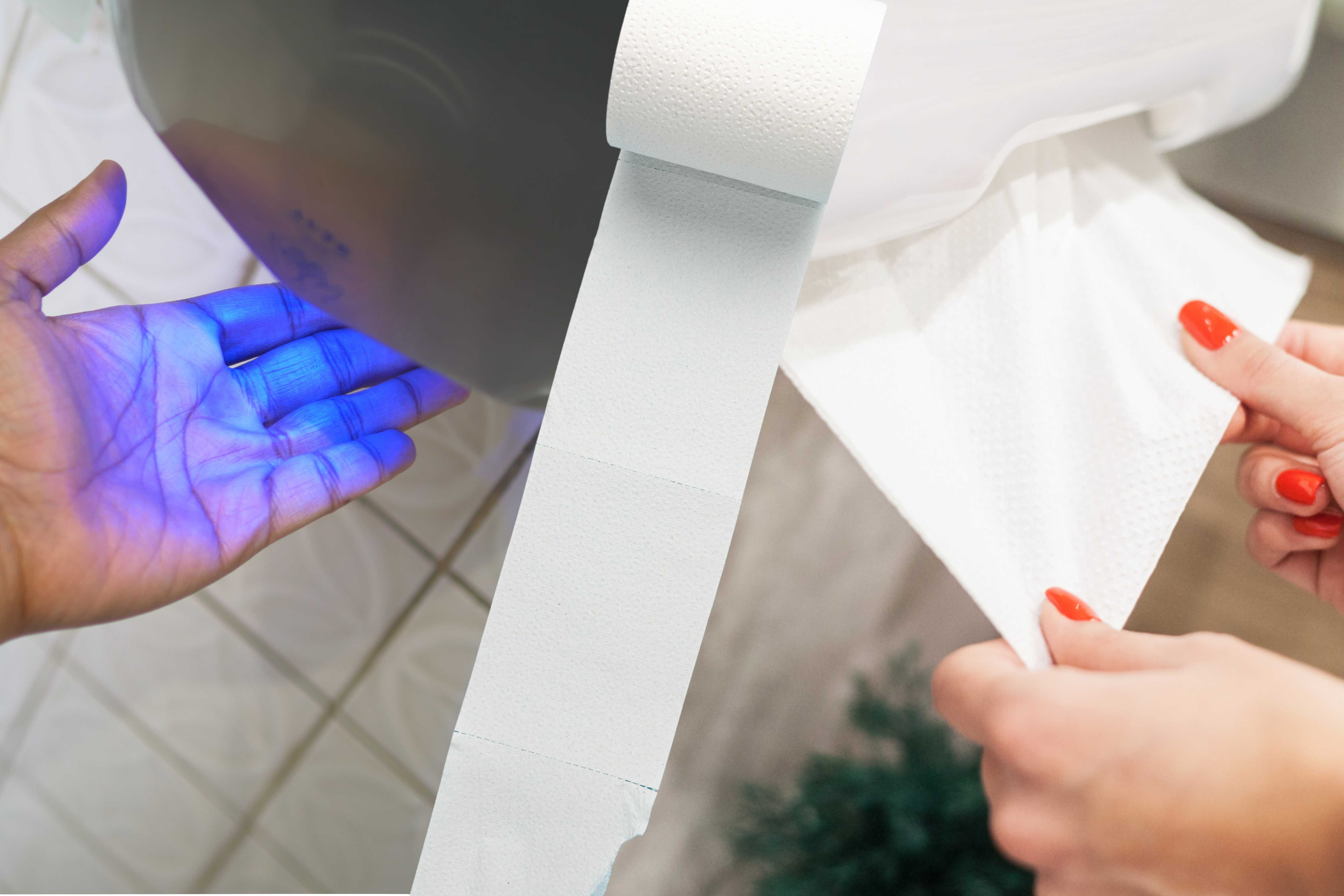
When it comes to drying your hands, there are two main options: hand dryers and paper towels. The ongoing discussion around hand dryers vs paper towels is especially relevant for businesses, facilities managers, and anyone responsible for washroom hygiene. Understanding the differences between the two can help you make informed decisions that affect cleanliness, running costs, and environmental impact.
In this article, we look at the question many people ask: are hand dryers better than paper towels? By comparing speed, hygiene, cost effectiveness, user experience, and sustainability, you will gain a clear view of whether a paper towel or a hand dryer is the better choice for your setting and why it matters.
Speed & Efficiency: Hand Dryers vs Paper Towels
Speed is often one of the first things people notice when comparing hand dryers vs paper towels, especially in busy washrooms where queues and turnaround times matter. The faster users can dry their hands, the more efficiently the space can be used.
Drying Time Comparison
Modern high-speed hand dryers can dry hands in around 10 to 15 seconds, depending on the model and airflow strength. This can be quicker than older warm-air units, but still requires users to stand still until their hands are fully dry.
Paper towels, on the other hand, allow hands to be dried almost immediately. A single towel can absorb moisture in a few seconds, with additional sheets used if needed. This makes the paper towels vs hand dryer comparison particularly relevant in high-traffic environments such as offices, restaurants, and shopping centres.
Performance in High-Traffic Areas
In locations with a constant flow of users, both options have different efficiency considerations:
Hand Dryers
- No need for refilling, which avoids downtime due to empty dispensers
- Can handle continuous use, provided there are enough units installed
- Drying time per person may create short queues at peak times
Paper Towels
- Very fast individual drying, reducing time spent at the sink
- Dispensers can run out and require regular restocking
- Disposal bins may fill quickly and need frequent emptying
Overall, when looking purely at speed and efficiency, paper towels often feel quicker for the individual user, while hand dryers can be more efficient for facilities that want a continuous, low-interruption solution.
Hygiene & Cleanliness
When comparing hand dryers vs paper towels, hygiene is a key factor, especially in public or high-traffic washrooms. How each method handles bacteria and contamination can influence which is best for your environment.
Bacteria and contamination risks
Hand dryers, particularly older warm-air models, can sometimes spread bacteria and germs through the air. High-speed jet dryers are more effective at drying hands quickly but may still blow droplets into the surrounding area, potentially contaminating nearby surfaces.
Drying hands with paper towels provides a more controlled method. By physically wiping moisture and bacteria off the hands, paper towels can reduce the chance of leaving germs behind. However, improperly disposed towels can create hygiene issues if bins overflow.
Maintenance and cleaning requirements
Hand dryers
- Require occasional maintenance to ensure proper airflow
- Surfaces should be cleaned regularly to prevent build-up of dust and bacteria
- No ongoing supply management
Paper towels
- Dispensers must be restocked consistently
- Bins need frequent emptying to prevent overflow and bad odours
- Surfaces around bins can become messy if towels are discarded improperly
In terms of hygiene, using paper towels tends to reduce bacteria on hands and surfaces more effectively, while hand dryers require good maintenance and proper spacing to minimise contamination risks.

Environmental Impact
Sustainability is an important consideration for any business or facility. Hand dryers and paper towels each have different effects on energy use, waste, and natural resources, and understanding these differences can help you make a more environmentally conscious choice.
Energy And Resource Use
Hand dryers require electricity to operate, and high-speed models can use more power over shorter periods. While they don’t rely on physical materials, their overall environmental footprint depends on energy efficiency and the source of electricity.
Paper towels, on the other hand, consume natural resources such as trees and water during production. Transportation and disposal add to their carbon footprint. Some paper towels can be composted or recycled, helping to reduce their environmental impact.
Waste And Sustainability
Hand Dryers
- Produce no direct waste
- Longevity reduces the need for replacements
- Environmental impact is linked to electricity consumption
Paper Towels
- Generate physical waste that must be collected and managed
- Can be made from recycled materials
- Composting options help lower environmental costs
When choosing between a hand dryer and paper towels, it’s important to balance energy consumption with material waste to make a decision that fits your sustainability goals.
Cost Effectiveness
When deciding between hand dryers and paper towels, cost is a key factor for any business or facility. While the initial purchase price is one consideration, ongoing expenses such as maintenance, supplies, and energy usage can have an even bigger impact over time.
Installation and upfront costs
Hand dryers generally have a higher upfront cost, especially for high-speed or energy-efficient models. Installation may also require electrical work, which adds to the initial investment. Paper towel dispensers, by comparison, are usually cheaper to buy and easy to install, making them a more budget-friendly option for smaller facilities.
Long-Term Maintenance & Supply Costs
Hand Dryers
- Minimal ongoing costs beyond electricity
- Occasional servicing or part replacement may be required
- No need to restock materials
Paper Towels
- Continuous expense for replacement towels
- Regular bin emptying and dispenser maintenance required
- Costs can add up quickly in high-traffic areas
Ultimately, the choice comes down to balancing upfront investment with ongoing costs. Facilities with heavy traffic may find that the lower running costs of hand dryers offset the initial expense, while smaller sites may prefer the simplicity and lower initial cost of paper towels.
User Experience
How people feel when drying their hands can make a big difference in overall satisfaction and hygiene habits. Comfort, convenience, and noise levels all contribute to the user experience, and they vary between hand dryers and paper towels.
Comfort & Convenience
Paper towels provide a tactile, immediate way to dry hands, which many users find satisfying. They allow people to dry hands quickly without standing in one spot, making them especially convenient for children, older adults, or anyone in a hurry.
Hand dryers remove the need for physical materials and are often seen as more hygienic, but some users find the strong airflow uncomfortable. High-speed models can dry hands quickly, yet the noise can be off-putting, particularly in quieter environments such as offices or libraries.
Public Preference & Perception
Paper Towels
- Preferred for speed and familiarity
- Users feel in control of the drying process
- Can give the impression of a cleaner, more traditional washroom
Hand Dryers
- Seen as modern and low-maintenance
- Environmentally friendly perception due to no paper waste
- Noise and strong airflow can deter some users
Accessibility & Convenience
Accessibility is an essential factor when choosing between hand dryers and paper towels. Facilities need to ensure that all users, including children, older adults, and people with disabilities, can comfortably and safely dry their hands.
Suitability for all users
Paper towels are straightforward to use and require minimal effort. They can be easily reached and manipulated by children or people with limited mobility, making them a very inclusive option.
Hand dryers can be less accessible for some users. High-mounted units may be difficult for children or wheelchair users to reach, and those with limited hand dexterity might struggle to activate sensors or hold hands under strong airflow.
Convenience in Different Settings
Paper Towels
- Quick to grab and use
- Easy to replace or restock
- Provide a reliable drying option even if power fails
Hand Dryers
- Require no refills or physical supplies
- Can reduce clutter in washrooms
- May slow down users unfamiliar with sensor-activated or high-speed models
Energy & Resource Use
Understanding the energy and resources each drying option consumes helps businesses assess their environmental footprint and operating costs. Here’s a clear comparison:
Evaluating these factors highlights the trade-offs between hand dryers and paper towels. Hand dryers offer low waste and long-term durability but rely on electricity, while paper towels use ongoing materials and create waste but require no power.
Choosing the right option depends on whether a facility prioritises energy efficiency, resource use, or convenience, helping to balance environmental responsibility with practical needs.
Key Takeaways for Hand Dryers vs Paper Towels
- Speed & Efficiency: Paper towels allow hands to be dried almost immediately, making them ideal for high-traffic areas. Hand dryers can handle continuous use but may create short queues during peak times.
- Hygiene & Cleanliness: Drying hands with paper towels can reduce bacteria on hands and surfaces more effectively, while hand dryers require proper maintenance and spacing to minimise contamination risks.
- Environmental Impact: Hand dryers produce no physical waste but use electricity, with their footprint depending on energy source. Paper towels generate waste but can be recycled or composted in some facilities.
- Cost Effectiveness: Hand dryers have a higher upfront cost but lower ongoing expenses, whereas paper towels are cheaper to install but incur continuous supply and disposal costs.
- User Experience & Comfort: Paper towels are quick, tactile, and easy for all users. Hand dryers are low-maintenance but can be noisy or uncomfortable for some users.
- Accessibility & Convenience: Paper towels are more accessible for children, older adults, and people with disabilities. Hand dryers can be less convenient for users with mobility or dexterity challenges.
- Energy & Resource Use: Hand dryers rely on electricity but last many years, reducing material use. Paper towels require continual resource input but don’t use electricity during drying.
FAQs
How should you dry your hands?
The most effective way to dry your hands is thoroughly and completely, using either a hand dryer or paper towels. Ensure all surfaces, including between fingers and around nails, are dried to prevent bacterial growth. Paper towels allow for quick, controlled drying, while high-speed hand dryers can achieve similar results if used properly.
Do hand dryers spread germs?
Hand dryers can disperse bacteria if not properly maintained, especially older warm-air models. High-speed jet dryers blow air at strong pressure, which may spread droplets into the surrounding area. Regular cleaning and sufficient spacing between units can reduce this risk, making modern dryers much safer for public use.
Should you dry your hands with a disposable paper towel?
Yes, using a disposable paper towel is one of the most hygienic ways to dry your hands. The towel physically removes moisture and bacteria, reducing the chance of germs remaining on the skin. Paper towels are particularly useful in high-traffic areas where speed and cleanliness are priorities.
What is the most hygienic way to dry your hands?
Drying hands with a disposable paper towel is generally considered the most hygienic method because it removes bacteria as it absorbs moisture. Hand dryers can also be hygienic if well-maintained, but they may spread airborne bacteria if used improperly or in crowded spaces.
Choose the Right Solution for Your Facility with Woosh Washrooms
Deciding between hand dryers and paper towels involves weighing hygiene, cost, speed, user experience, and environmental impact. Whether you prioritise efficiency, sustainability, or accessibility, understanding the differences ensures you select the option that works best for your washroom and users.
At Woosh Washrooms, we help businesses and facilities make informed decisions about hygiene solutions. Explore our washroom solutions to find the ideal products for your space. If you’re ready to improve your facilities, contact us today to discuss your options and get expert guidance tailored to your needs.